
Both can build a great deck. Coastal moisture just treats them very differently over time.
Composite vs. Wood Decking: Which Holds Up Better in Bay Area Fog and Salt Air?
Last updated: October 2026
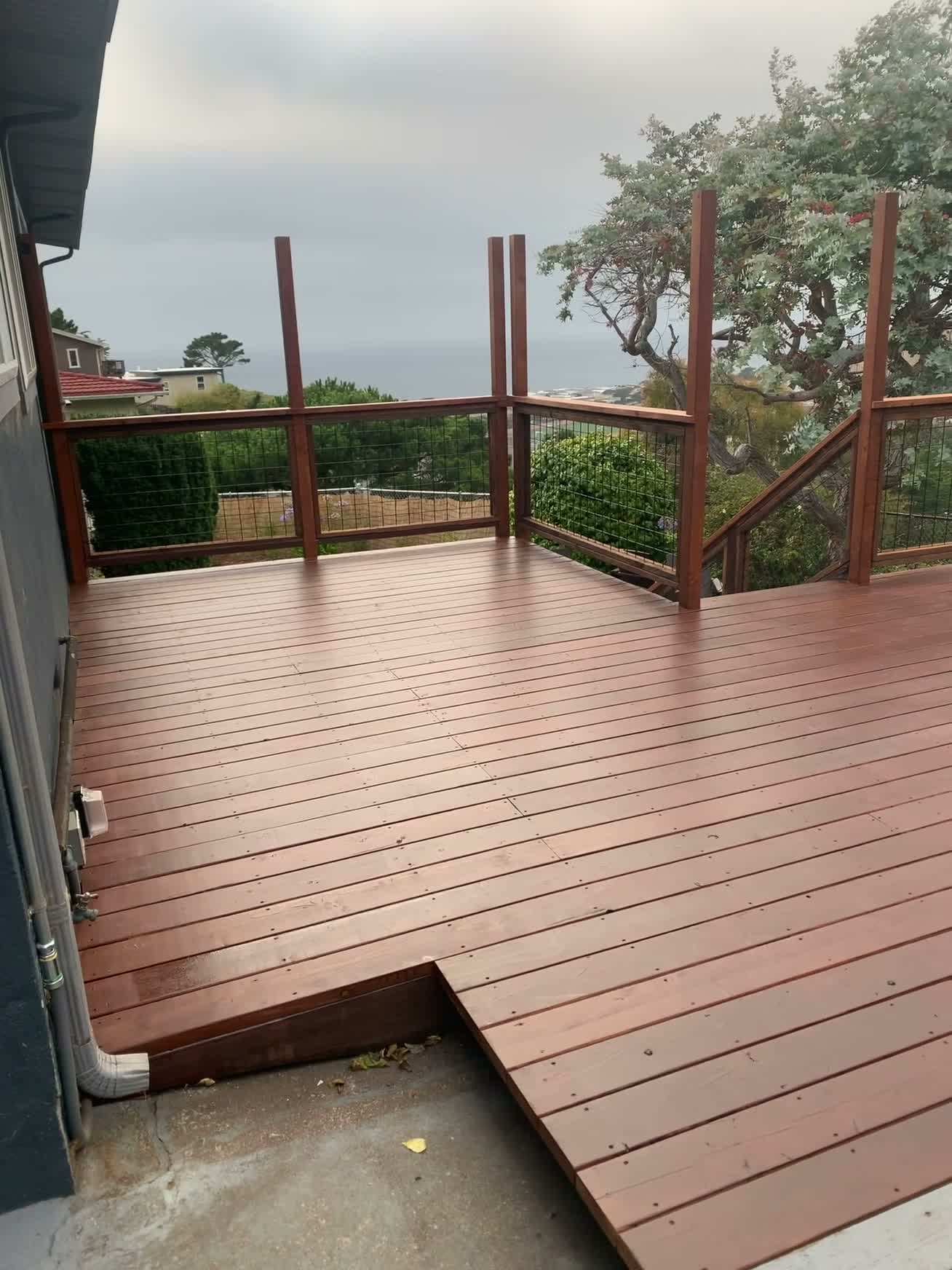
Is composite decking or wood decking better for a coastal home in the Bay Area?
Composite decking generally holds up better in coastal conditions because it resists moisture absorption, won't rot, and doesn't need staining or sealing to stay protected — all useful traits against the fog and salt air that a Pacifica or coastal Bay Area deck deals with daily. Wood decking, usually pressure-treated lumber or cedar, costs less upfront and gives a more traditional look, but it needs regular staining or sealing to resist that same moisture, and untreated or neglected wood will show rot and warping sooner near the coast than it would inland. The right pick comes down to whether you'd rather pay more upfront for lower maintenance, or less upfront with an ongoing maintenance commitment.
City Dweller's deck work is built specifically around coastal exposure — every deck rebuild starts with framing and footings rated to hold up against the salt air, fog, and moisture that define Pacifica's climate, not just the visible decking boards on top.
Why coastal exposure matters more for decking than it does inland
A deck inland dries out between rainstorms. A deck in Pacifica or along the coast deals with fog and salt-laden air on a near-daily basis, so it rarely gets a long dry stretch. That constant low-level moisture is what separates how composite and wood perform here compared to how the same materials perform in a drier inland Bay Area town.
Composite decking: lower maintenance, higher upfront cost
Composite decking is engineered from wood fiber and plastic, which means it doesn't absorb moisture the way raw lumber does. It won't rot, splinter, or need staining to stay protected from salt air — the color and surface are baked into the material itself rather than applied on top. The tradeoff is a higher material cost than pressure-treated lumber.
- Resists moisture absorption, rot, and splintering
- No staining or sealing required to maintain weather resistance
- Consistent color and texture that doesn't require yearly upkeep
- Higher material cost than pressure-treated wood
Wood decking: lower upfront cost, ongoing maintenance commitment
Pressure-treated lumber and cedar are the two most common wood options, and both offer a natural look at a lower material cost than composite. The tradeoff is maintenance: wood needs to be stained or sealed on a regular schedule to keep moisture out, and skipping that near the coast speeds up warping, graying, and eventually rot.
- Lower material cost than composite
- Traditional, natural wood appearance many homeowners prefer
- Requires regular staining or sealing to resist coastal moisture
- Higher risk of warping or rot if maintenance is skipped near the coast
Composite vs. wood decking at a glance
Here's how the two compare across the factors that matter most for a coastal Bay Area deck.
| Factor | Composite Decking | Wood Decking |
|---|---|---|
| Upfront material cost | Higher | Lower |
| Maintenance | Minimal — no staining/sealing | Regular staining/sealing needed |
| Coastal moisture resistance | High — won't rot or absorb moisture | Lower — needs upkeep to resist moisture |
| Appearance | Consistent, engineered look | Natural, traditional wood grain |
| Best fit for | Owners who want to minimize upkeep | Owners who want a traditional look and lower upfront cost |
What actually determines a deck's lifespan near the coast
The decking boards get the attention, but the framing and footings underneath matter just as much — a beautiful composite surface on undersized or poorly anchored framing is still a safety problem waiting to happen. Any deck rebuild near the coast should treat the structure below the boards as seriously as the material on top.
See City Dweller’s decking services and general contractor services services in Pacifica and across the Bay Area, or check the full list of areas served.
Common Questions
FAQs
- Does composite decking ever need any maintenance at all?
- Less than wood, but not zero. An occasional wash to clear off dirt, pollen, or salt residue keeps composite decking looking its best, but it doesn't need staining, sealing, or refinishing the way wood does. That's the core maintenance difference between the two materials.
- Will cedar hold up better than pressure-treated lumber near the coast?
- Cedar has some natural rot resistance compared to other untreated woods, but it still needs regular sealing or staining to perform well against sustained coastal moisture. Pressure-treated lumber is chemically treated to resist rot and insects, which can make it a more budget-friendly choice, but it also benefits from regular sealing near the coast.
- Can I rebuild just the decking boards and keep the existing framing?
- Sometimes — if the framing and footings are still structurally sound, which needs an on-site inspection to confirm. If the frame shows rot, undersized footings, or has been flagged in a past inspection, a full rebuild is the safer call, since new boards on a compromised structure don't solve the underlying problem.
- How much does a deck rebuild cost?
- It depends on size, material choice (composite, cedar, or pressure-treated), and how much of the existing framing and footings need replacing. Request a free quote and you'll get real numbers for your specific deck instead of a general estimate.
Keep Reading
Related posts
Have a project in mind? David replies to every inquiry personally.